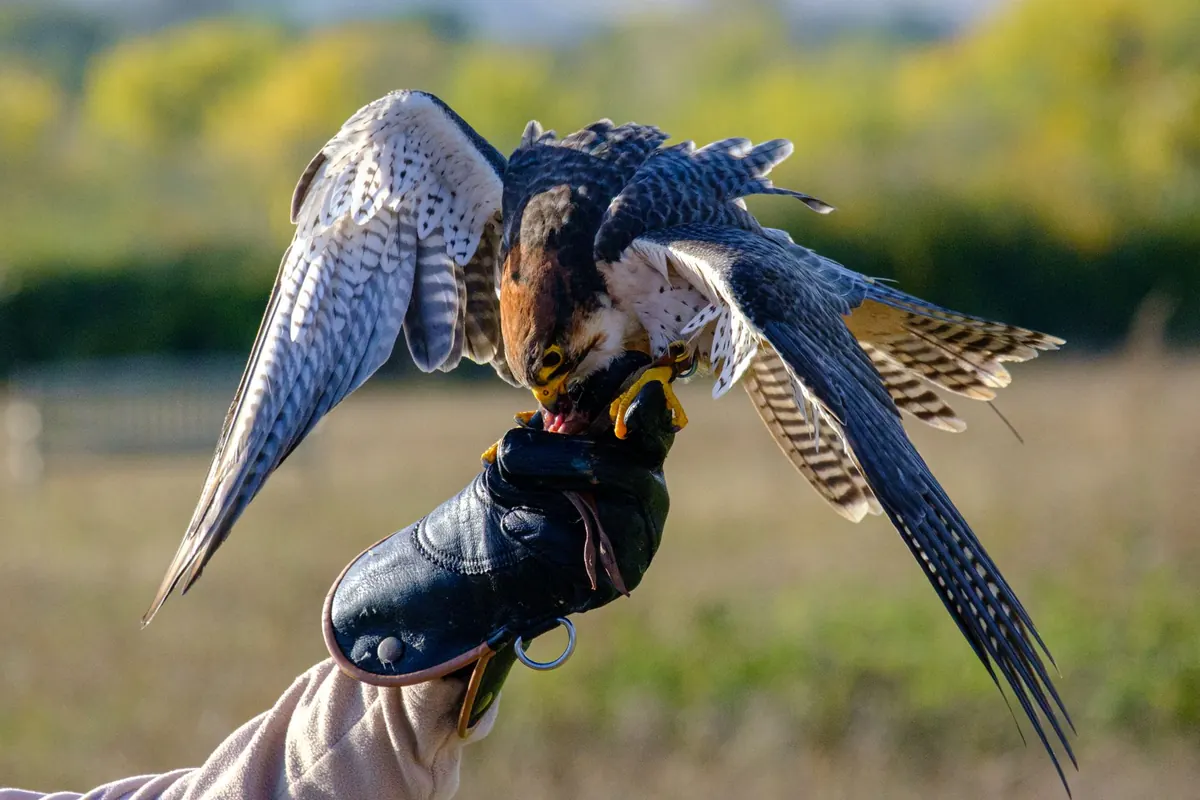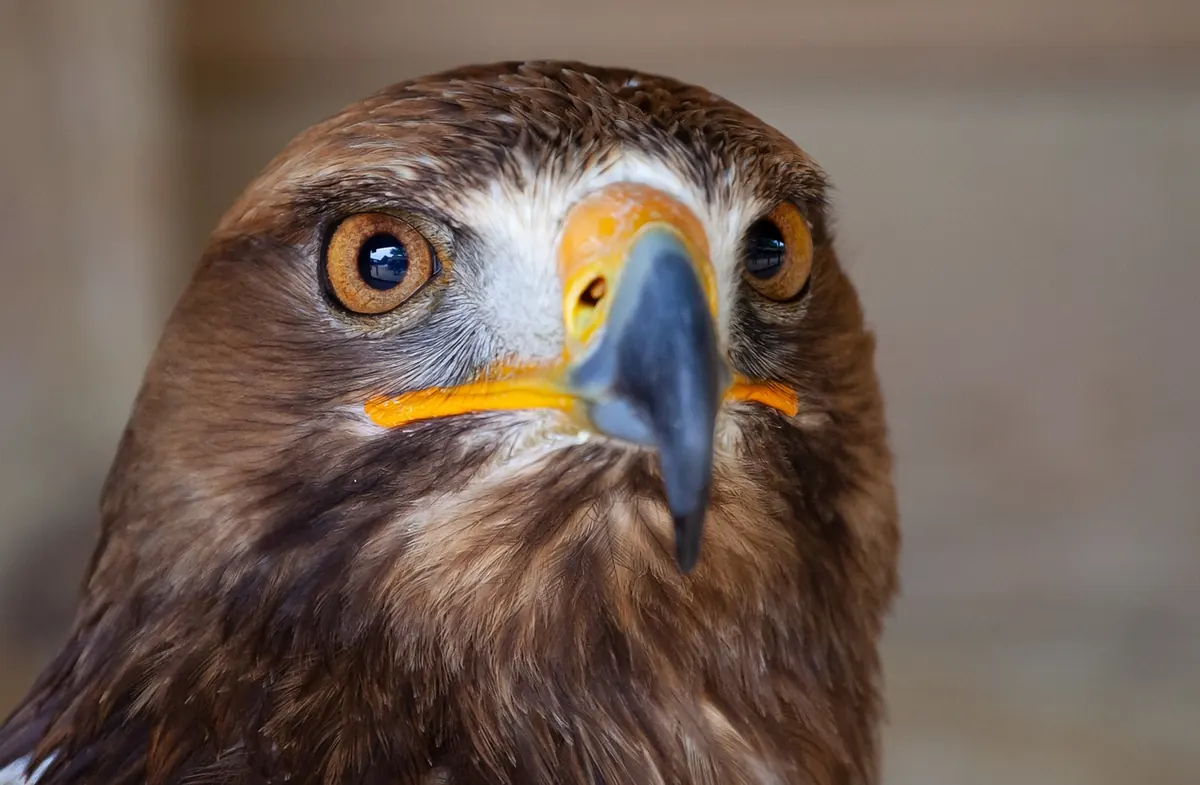
Harris's Hawk vs Red-Tailed Hawk: Which Is the Better First Bird for UK Falconry?
Every few weeks the same question comes up at a club night or in a beginners' group: Harris's hawk or red-tailed hawk for a first bird? The two get lumped together because both are broad-winged, roughly crow-to-buzzard-sized hawks sold as a sensible starting point. In Britain, they are not remotely equal choices.
The short answer
For the overwhelming majority of UK beginners, a Harris's hawk is the better first bird. It is more sociable, more tolerant of handling, easier to recover if something goes wrong, and far better suited to the small, busy permissions most of us actually have.
That does not make the red-tailed hawk a bad bird. In North America it is a classic first hawk, and plenty of experienced falconers rate it highly. It is simply a bird that asks more of you, and whose natural style sits awkwardly with much of the British countryside.
The bird isn't the difficult part. The first two seasons of learning how to fly it are.
Temperament: the social hunter versus the solitary one
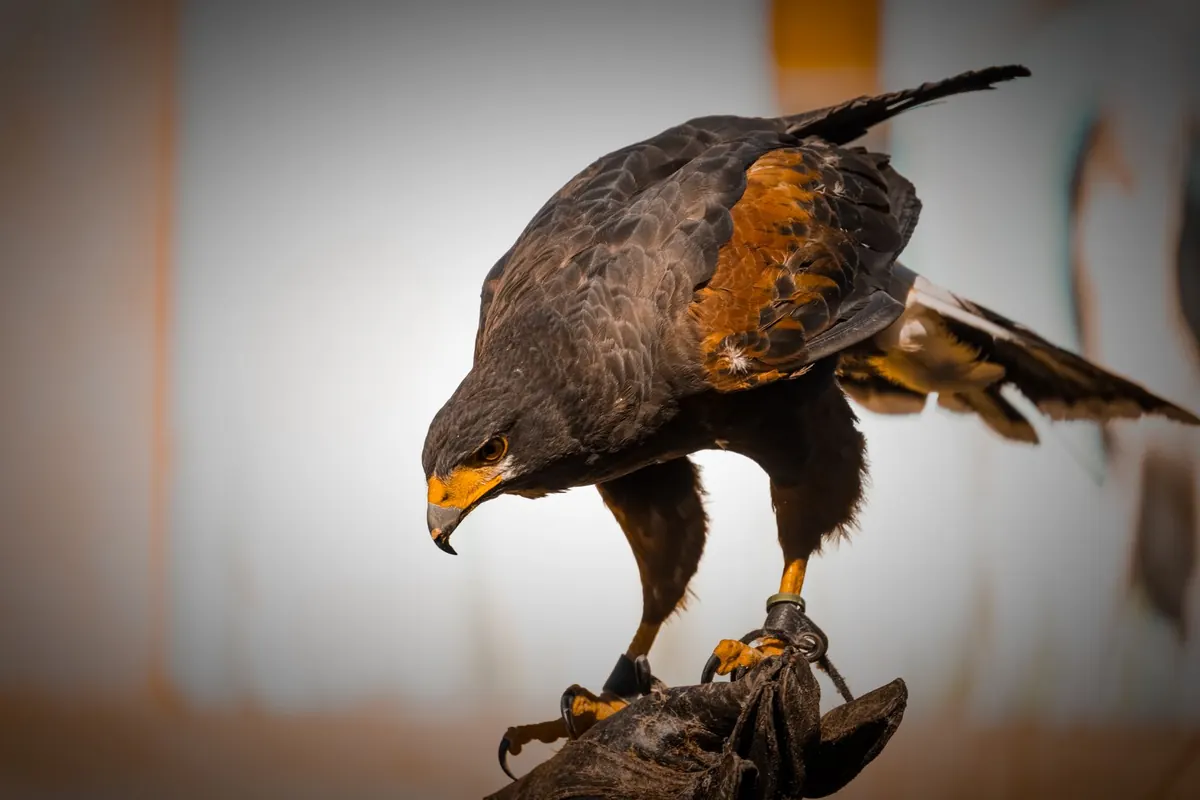
Harris's hawks are unusual among raptors in hunting cooperatively in family groups. That social wiring carries straight into captivity. They accept a glove, they accept other birds, they accept a dog trotting alongside, and they generally take new places and new people in their stride. A Harris's that has been handled sensibly is a bird you can take to a friend's permission on Saturday and a country fair the following weekend.
Red-tails are the opposite. They are solitary ambush hunters, built to sit still and then commit absolutely. In practice this shows up as a bird that is more suspicious of novelty, more likely to bate on the fist in the early weeks, and less interested in your company. Some individuals become steady and genuinely enjoyable; others never quite settle in a British setting with hedges, dog walkers and roads.
Two honest caveats. Harris's hawks can become so relaxed that they treat you as a perch rather than a partner, and imprinted birds in particular can be noisy and demanding. Red-tails are not "nasty" birds; they simply respond to weight and opportunity rather than to a relationship.
Training and flying
Both birds are trained in the same broad way: get the weight right, build a positive association with the glove and the lure, then gradually extend the distance and the difficulty. The difference is where each bird naturally goes once it is flying free.
- Harris's hawk: tends to follow on, wait on relatively close, and come back to the fist or lure readily. It can be worked in a cast with another bird, which is a genuine safety net for a beginner. If it does go astray, a lost Harris's is often recovered because it still associates the lure with food.
- Red-tailed hawk: tends to go up and stay up. A red-tail with a thermal under it will soar, and on a 20-acre permission it can be on the boundary or in the next parish before you have thought about the lure. It is also strong enough to take a squirrel into a tree, which turns a clean slip into a long, awkward recovery.
None of that is unforgivable, but it means a red-tail rewards open ground, a big permission, patience and a falconer who has already learned to read a bird. That is not a first-season skill set.
Housing, weight and food
Both need a secure weathering area with shelter from prevailing wind and rain, shade in summer, clean water for bathing, and a perch that suits the bird's feet. The practical differences are size and mass.
A Harris's hawk typically sits somewhere between about 600 g and a kilo, depending on sex, with females the larger bird. A big female red-tail can be well over a kilo and sometimes approaches 1.5 kg. That extra weight means thicker, softer perch surfaces, more space, and more serious consequences if the bird batters its feathers on a small block. Foot problems such as bumblefoot are more likely when a heavy bird is given an unsuitable perch.
Food is much the same shopping list for both: day-old chicks, quail, rat, rabbit, pigeon and mouse, fed whole so the bird gets fur, feather and bone to cast. Red-tails eat noticeably more volume, so your food bill and freezer space both go up. Defrost properly, never refreeze, and keep everything clean.
Weight control matters more with a red-tail. A Harris's a few grammes heavy will often still work; a red-tail a few grammes heavy will simply leave. You will want a decent set of falconry scales accurate to a gramme and a written daily log. Weigh the bird every day and record it, even when you are not flying.
Legal status and paperwork
In the UK you do not generally need a licence simply to keep a bird of prey, but the surrounding rules are not optional.
- Non-native species: both Harris's hawks and red-tailed hawks are non-native here. Releasing one, or allowing one to escape, is an offence under the Wildlife and Countryside Act 1981. A lost bird is not just your loss; it is a legal problem and a welfare one.
- CITES: both species are listed under CITES. Keeping a bird for your own flying is one thing; selling, breeding for sale, advertising or moving birds commercially can require permits or certificates. In Great Britain the relevant authority is APHA; Scotland, Wales and Northern Ireland have their own arrangements and rules genuinely differ between nations.
- Public activity: flying displays, paid experiences or anything involving the public can bring additional requirements around animal welfare and licensing.
- Welfare: the Animal Welfare Act 2006 applies to your bird exactly as it does to a dog or a horse. Adequate housing, food, water and veterinary care are your responsibility.
Rules change, and this is general guidance only. Check the current position with the relevant authority, or take proper advice, before you buy anything.
Availability and the cheap-bird trap
Captive-bred Harris's hawks are comparatively easy to find in the UK from established breeders, with known histories and paperwork. Red-tailed hawks are bred here far less often, so you may be looking at imported birds, longer waits and more stress on the bird.
Whatever you buy, the hawk is the cheapest part of the setup. Scales, perch and furniture, bath, jesses, swivel, leash, gloves, food and a decent transmitter if you plan to fly a red-tail will add up quickly, and a vet who knows raptors is worth finding before you need one. Buying a bargain bird with a poor start, damaged feathers or an unknown hand-rearing history is the most expensive route there is.
Getting your first season right
- Find a mentor before you find a bird. Watch someone fly a Harris's hawk and a red-tail if you can, and ask what their day actually looks like.
- Secure your permission first. One good, quiet field with the landowner's backing beats five vague promises.
- Set the housing up and run it empty for a fortnight. Fix the problems before a bird is in it.
- Buy the kit, weigh the bird daily, and keep a log of weights, weather and quarry.
- Take the bird on in late summer or autumn so you have a full season ahead of you rather than a few weeks before the trees close in.
- Join a recognised falconry club and insure yourself. The advice you get from people who have flown birds for twenty years is worth more than any forum thread.
Choose a Harris's hawk because you want one and will enjoy the way it works, not merely because it is the easy option. It is the easier option, and for a first bird in the UK that is usually reason enough.
Photo: TheOtherKev / Pixabay
You Might Also Like
A practical first aid checklist for falconers — controlling bleeding, supporting suspected fractures, and dealing with heat stress, poisoning and shock before you reach an avian vet.
Practical ways UK falconers can back raptor conservation — joining survey and nest-box projects, breeding responsibly, improving habitat and keeping records that stand up.